

Level 1
EAA Afternoon: Easter and Saint Patrick’s Day
EAA Afternoon: Christmas

1ew EAA Afternoon: Halloween
On our very first EAA Afternoon, we learned more about how Halloween is celebrated in the US. We got to try out apple bobbing, created healthy but scary snacks such as fake eyeballs out of lychee, blackberries and strawberry sauce. We also practised trick or treating in English to get candy, came up with plans for a pumpkin carving contest, danced to spooky songs and folded our very own scary pumpkins. What a fun first EAA Afternoon!

Spine-tingling Halloween stories
Although they’re only first graders, these two authors have already written a complete Halloween story themselves, full of mystery and suspense that gave us goosebumps and made our spines tingle. Both of them were awarded the 1ew-Halloween-prize! Extremely well done, Alexander!🎃 Perfect job, Eddy!🎃


Level 2
EAA Afternoon
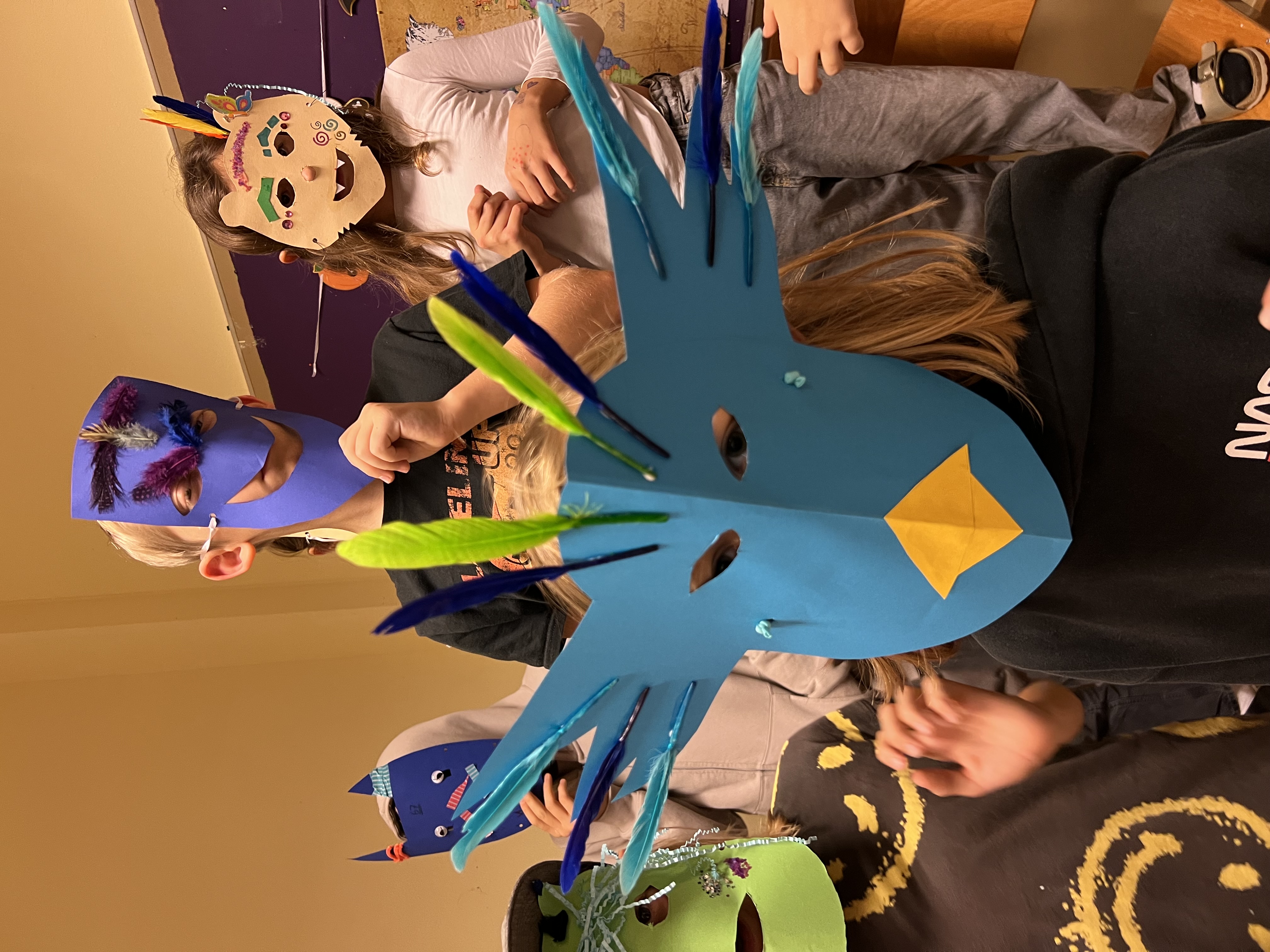
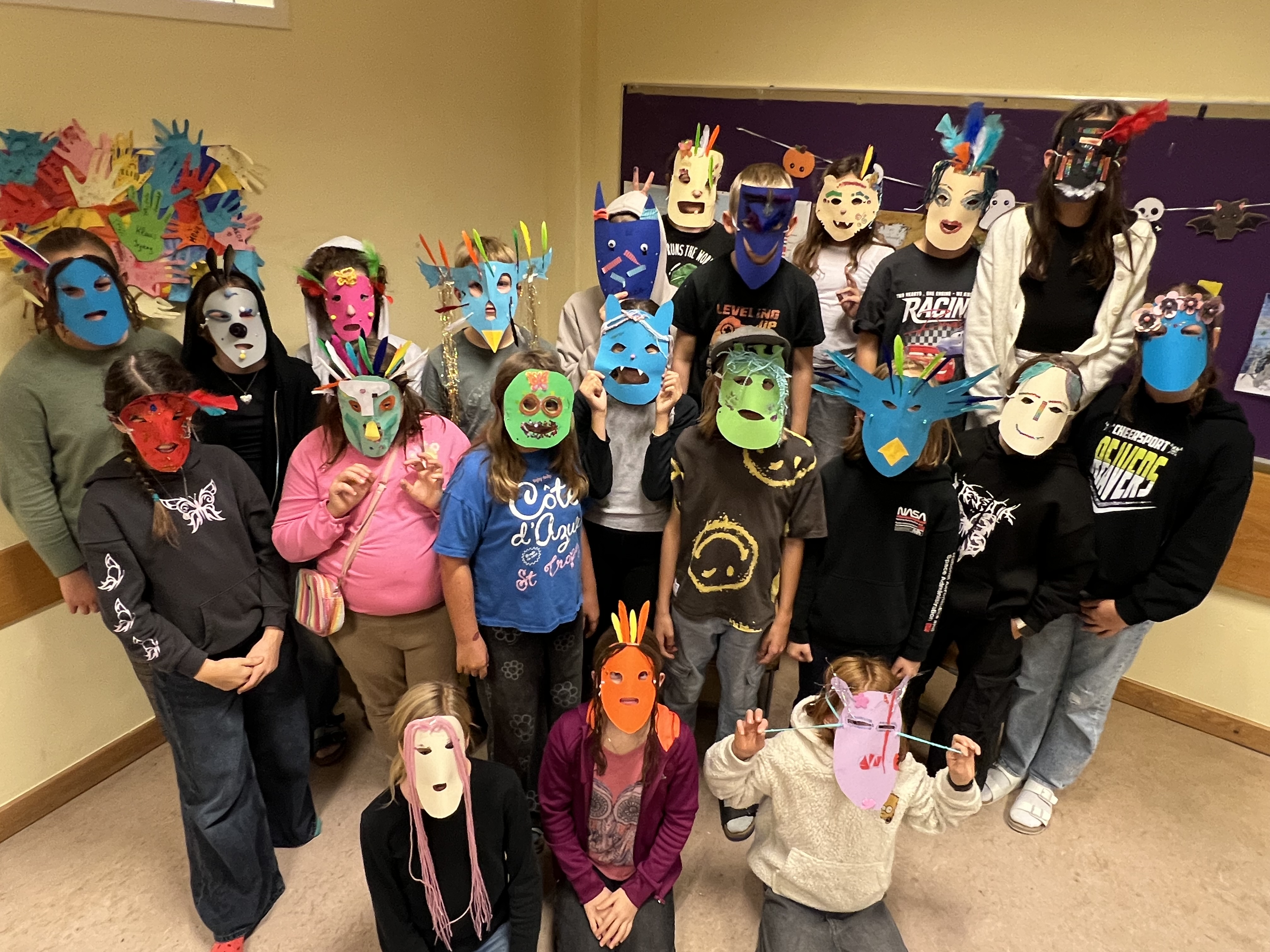
During the second project afternoon in class 2ek we discussed Thanksgiving, the Pilgrims, and Native Americans. First, we watched a video about the Iroquois creation myth. We learned about Sky Woman and the animals who helped build the Earth. Then we learned about the Mayflower journey, where the Pilgrims left Europe in 1620 to find religious freedom. In America, their first winter was very hard, and many died, but Native Americans helped them survive. They taught them how to farm and fish. After a good harvest, they celebrated the first Thanksgiving together. At the end of the afternoon we created our own masks, like the ones of the Native Americans.
Prof. Gerlinde Zimmermann
Level 3

London calling 3ew
Our third year of EAA-afternoons has started out with an imaginary trip to London: First of all, we found out really interesting facts about the British Royal family and their duties. After all, it is quite special being able to remember watching the funeral of Queen Elizabeth II and the accession to the throne of Charles III on TV, if you’re as young as we are.
In the next step, we went on a tour through London guided by pictures and information and wrote spontaneous poetry and stories inspired by typically English symbols.
Finally, we designed and built models of well-known London sights to decorate our classroom’s window sill with.
All in all, this afternoon felt pretty close to a trip to the real city!


Level 4
Last EAA Afternoon
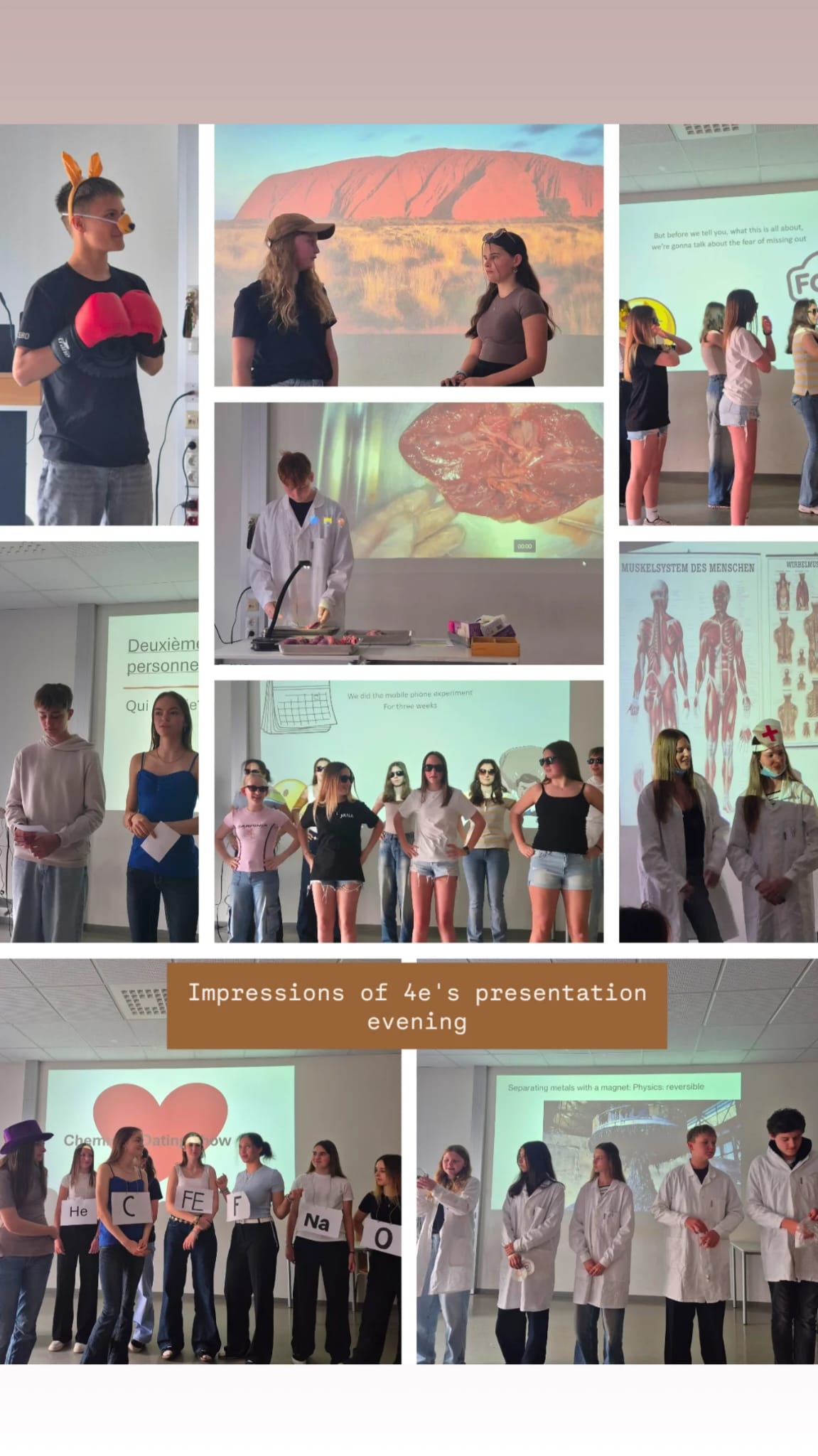
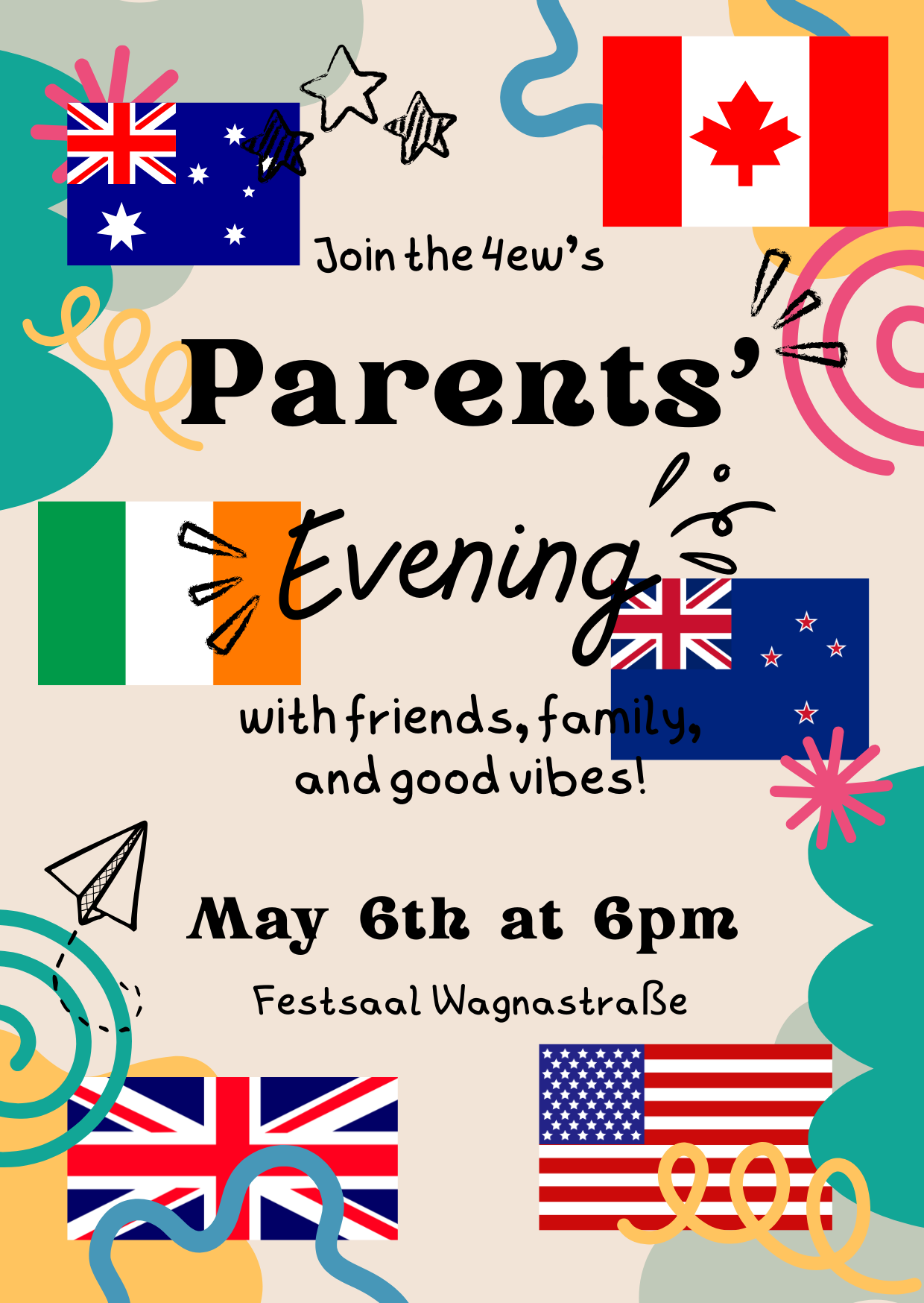
Invitation EAA Afternoon
4ew Delves into Molecular Gastronomy
The third English afternoon of 4ew took place on March 16, and this time the focus was on molecular gastronomy. While some students had previously heard of this subdiscipline of food science, for most, it was a completely new and exciting experience. Molecular gastronomy explores how food behaves at a molecular level and encourages a creative approach to cooking.
The first part of the afternoon consisted of a hands-on lab session in which students applied the method of spherification—turning liquids into soft, gel-like spheres—to create cola caviar. Working in groups, they combined cola with sodium alginate and prepared a calcium lactate solution. The highlight of the session was using pipettes to carefully drop the cola-alginate mixture into the calcium lactate bath, where it instantly formed edible pearls. Before long, a friendly competition developed as students tried to create the largest caviar. The 4ew students demonstrated remarkable creativity, producing visually appealing and delicious cola spheres in a wide variety of shapes and sizes.
In the second part, students were given the task of designing and promoting their own cola caviar product. Stepping into the role of food marketing experts, they came up with brand names, catchy slogans, and inventive ideas for presenting and using their product. The afternoon came to a successful close with group presentations of their advertisements, highlighting both their creativity and their ability to work effectively as a team.


Exploring the United States – An Interactive EAA Afternoon
On our most recent EAA afternoon, class 4ew embarked on a thrilling journey across the United States, where students explored American culture, geography, and diversity in a hands-on and creative way.
The session began with small group presentations: each teacher introduced two different U.S. states, sharing intriguing facts, traditions, and highlights. Students engaged actively, asking questions and comparing the unique features of said states. This method of interaction sparked curiosity and set the perfect stage for the main activity later on.
In the second part, the entire class collaborated on an interactive U.S. map. Working in small teams, students “designed” individual states by decorating their borders with typical pictures, symbols, and icons representing local culture, landmarks, and lifestyle. From cowboy hats to skyscrapers, beaches to mountains, the map became a colorful mosaic of American identity. To capture this creative work, we produced a short video showcasing the finished map and zooming into the magnificently designed states.
The project combined language learning with cultural discovery and teamwork, making the afternoon both educational and fun. It was a fascinating way to bring the U.S. to life in our classroom!
Our Time in Vienna
The Austrian Parliament
By Veit Berger @ Thu 25. Nov 2025 16:16
Two weeks ago our class went to Vienna, the capital of the Republic of Austria. We saw many great things, but today I am going to focus on the Austrian Parliament.
Firstly I’ll tell you some some basic facts about it. The Austrian Parliament in Vienna was built between 1874 and 1883 and it’s located on the famous Ringstraße. The Architect was Theophil Hansen and he designed it in 1869. The architecture is inspired by classical Greek temples, symbolising the origins of democracy. In front of the impressive building we can see a 5.5-meter statue of Pallas Athene, the goddess of wisdom.
The Austrian Parliament is a bicameral legislature with two chambers: the National Council and the Federal Council. The National Council has 183 members from 5 parties represented (ÖVP, SPÖ, FPÖ, NEOS, GRÜNE), that are elected by all Austrian citizens entitled to vote. The National Council is responsible for introducing, debating and passing laws, managing the budget and more. The Federal Council has 60 members and its major responsibility is the representation of the Federal Provinces’ interests in the legislative process at federal level.
I think that the Austrian Parliament is very interesting and a must-see when you are in Vienna! Have you ever been to the Austrian Parliament? Please comment!

The Highest Church in Austria – St. Stephan´s Cathedral
miahuss13, 25.11., 4:42 p.m.
Hey guys,
Have you ever been to Vienna? If not, you definitely have to go there one day, because I’ve been there and it was fantastic! While I visited the capital city of Austria with my class, we went to the St. Stephan’s Cathedral, a Roman Catholic church. At first, it sounded boring, but it was very interesting. For example, the St. Stephan’s Cathedral is the highest church of Austria, with a height of 136,44 meters. And in one tower of the St. Stephan’s Cathedral, the highest one, you can find the biggest and heaviest bell of Austria. It’s called “Pummerin“ and it weighs 21 tons. Can you believe this?! This church was by the way built in a gothic style, in 1137, and in 1578, all of the three towers of the St. Stephan’s Cathedral were finished. Unfortunately half of it got destroyed in WWII.
Inside of the big church, you can find a massive organ. I was shocked, because it was so huge! From the inside, the St. Stephan’s Cathedral is very high too. I really liked the gigantic and colourful windows in the church. Because the St. Stephan’s Cathedral was built in a gothic style, you can´t find any golden decoration in it, but lots of statues. They looked very pretty, even without gold, in my opinion. All in all, I can really recommend visiting the St. Stephan’s Cathedral since the information about it is very interesting. And now my question for you: Have you ever been inside of the St. Stephan’s Cathedral? Would be interesting to know! Thank’s for reading! <3
xxx,
Mia


lilly-jo.s
Our trip to the UNO City
In this blog post I am going to tell you about something very interesting we did on our trip to Vienna, which was my favourite attraction.
We did many exciting activities in Vienna but, in my opinion, one attraction that stood out was the UNO City. I hadn’t expected much because I had no idea what happens in the UNO City, but my expectations were exceeded. Strictly speaking, the UNO City is not in Vienna, as it is a neutral location. One important thing is that there is no real advantage to the UNO City being located in Vienna, because in this area every country is treated equally and on the same level. That is also the reason why, in the centre of the semi-circular building, the flags of all Member States are the same size and arranged in alphabetical order. It does not belong to Austria but is international territory belonging to the Member States of the United Nations. It is such an interesting and important place where so many things happen. Our guide was very smart and friendly and gave us great insight into it. He explained it very well and even showed us the conference room. Additionally, we got to see a very exciting thing: a real piece of the moon and a flag that had already been in space.
It was a very cool and informative week. But now it is your turn: Did you already know what the UNO City does, or have you ever visited the UNO City? Let me know in the comments.
(Lilly-Jo S., 4ew)

timeon.schober
Trip to Vienna
I’m so sorry that I haven’t posted anything here for such a long time. That’s because I was on a school trip to Vienna. We saw some amazing sights and now I want to tell you about my favourite one, the Parliament.
We had a tour that started at 9 o’clock. When we got there, our teachers first asked us some questions about the woman standing in front of the building. Almost all of us raised our hands and said that it was Pallas Athene. She stands there as a symbol of wisdom, justice, and the democratic order. Before we could go in, we had to go through a security check and everyone over 14 had to show a photo ID to get in.
Then we got to a cloakroom, where we put our backpacks and jackets. After that, we went into a “waiting room”, where we could watch the politicians answer questions. You could also see some legislative proposals that never went through. Our guide was a bit late, but he was really nice and introduced himself to us. After that, we started the tour, and he immediately explained how the building was constructed and that Theophil Hansen was its architect. Then we went up some stairs and suddenly stood in a huge room with big pillars made of marble. Unfortunately, two of them were destroyed by bombs in World War II and were replaced by a different type of marble. We also visited the plenary chamber, where the politicians sit and discuss; we even presented our own draft bill in a playful way and then acted it out.
I really enjoyed it and I think I would like to go there again when I’m older. Have you ever been to the Austrian Parliament? Let me know in the comments below.
(Timeon S. 4ew)
Anti-smoking campaigns by 4ew


4ew and the Festival of Lights
The first English afternoon of 4ew took place at the end of October and revolved around Diwali, the Indian Festival of Lights. The classroom was soon filled with color and laughter (when they tried to wrap themselves in saris, a rather complicated task) as the students explored the meaning behind this special celebration.
Throughout the afternoon, students immersed themselves in a variety of activities. They wrote and shared their own Diwali stories, inspired by tales of light conquering darkness and good triumphing over evil. Outside the school entrance, they drew beautiful rangolis—intricate chalk patterns that are meant to bring good luck and welcome guests. Inside, others handcrafted colorful greeting cards, decorated with candles, diyas, and bright designs.
By the end of the afternoon, everyone had learned something new about Indian culture and traditions. It was a joyful start to 4ew’s series of English afternoons. Let´s wait and see what the next one will bring.
Prof. Brandstätter


Level 5
Erasmus+ exchange with Poland
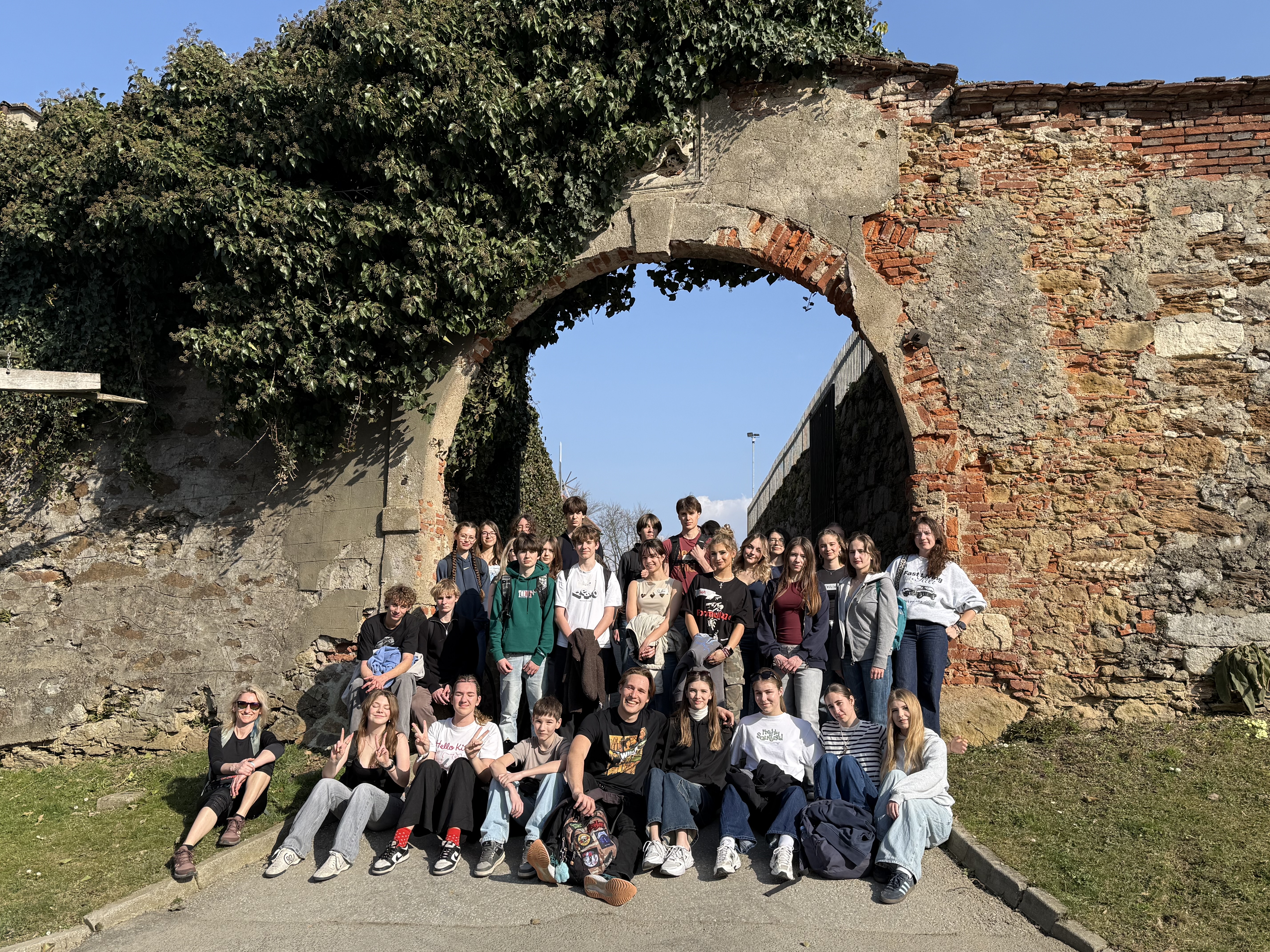
Our class had the privilege to have an exchange with Polish students from Sosnowiec for one week – it was definitely a really exciting week and a great opportunity, not to only improve our English skills, but also make lifelong friends and a lot of memories.
When the Polish students first walked through the door, we were all nervous. We took a look at all of the new faces and our excitement increased with every new Polish student that walked through the door. We all took our seats and said our first nervous “Hellos”. Even though the first few minutes were filled with awkward phrases, we immediately bonded with the Polish students. Everyone soon noticed that the Polish and Austrian students had much in common. Immediately, Polish and Austrian people started bombarded each other with questions and compliments about each other.
After each school was presented to the opposite country, we moved on to a workshop prepared by the Polish students. In addition to doing the assigned work, we shared laughter, jokes and information about the other country. Austrians teaching Polish students German words and the other way around. After the first two days, everyone had already made at least one new friend.
On the trip to chocolate factory “Zotter“, the Polish students got an insight into Austria’s biggest chocolate factory. Together, we tasted and also criticised chocolates, as well as walked through Zotter’s animal garden, where we had time to take a walk, take pictures and enjoy the playground.
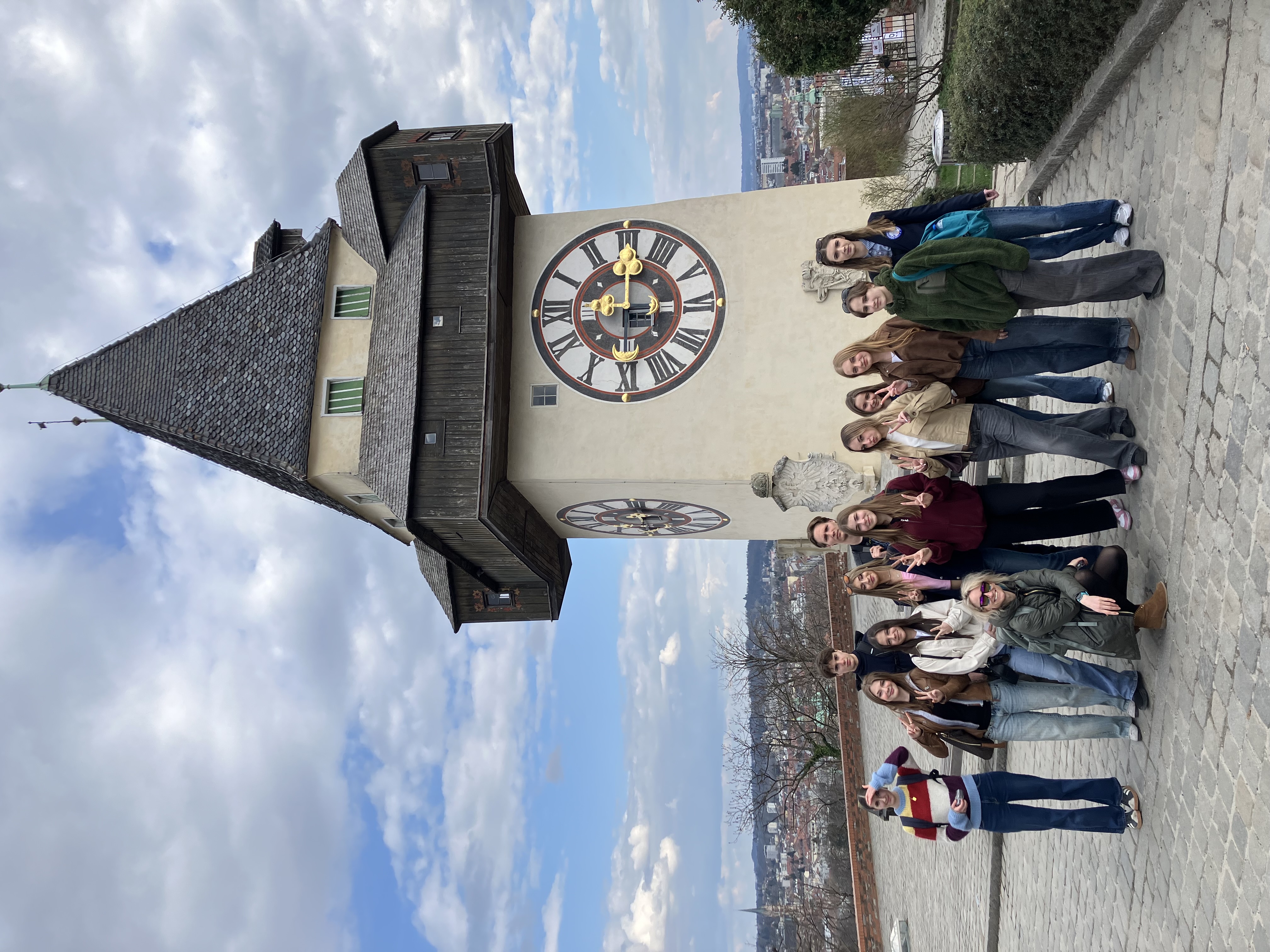
Another highlight, though probably also a sad day, was when we went to Graz to do some shopping and take a city tour. Sad, because this was our last day with our Polish friends. To make this last day memorable, we visited some of the most well-known places in Graz and even had a tour guide with us to explain Graz’ history. We enjoyed our last hours together before the time to say goodbye came – and it was a hard goodbye. Hugs and promises were shared.
We are separated through kilometers, yet there is something that connects us: the made memories and the English language. The language that even gave us the opportunity to make new friends. Two groups with different mother tongues, but one language that makes it possible to communicate with each other, share thoughts, opinions and make lifelong friendships.
The week was filled with talking, talking and more talking. Although, not only to improve our English (which we did for sure), but also to make memories and new friendships.
The exchange will always be a big highlight of our school time and our Polish friends will always have a big place in our hearts.
Katharina Klopfer (5ew)
Report: The Smartphone Experiment
by Elea Suppan
Introduction
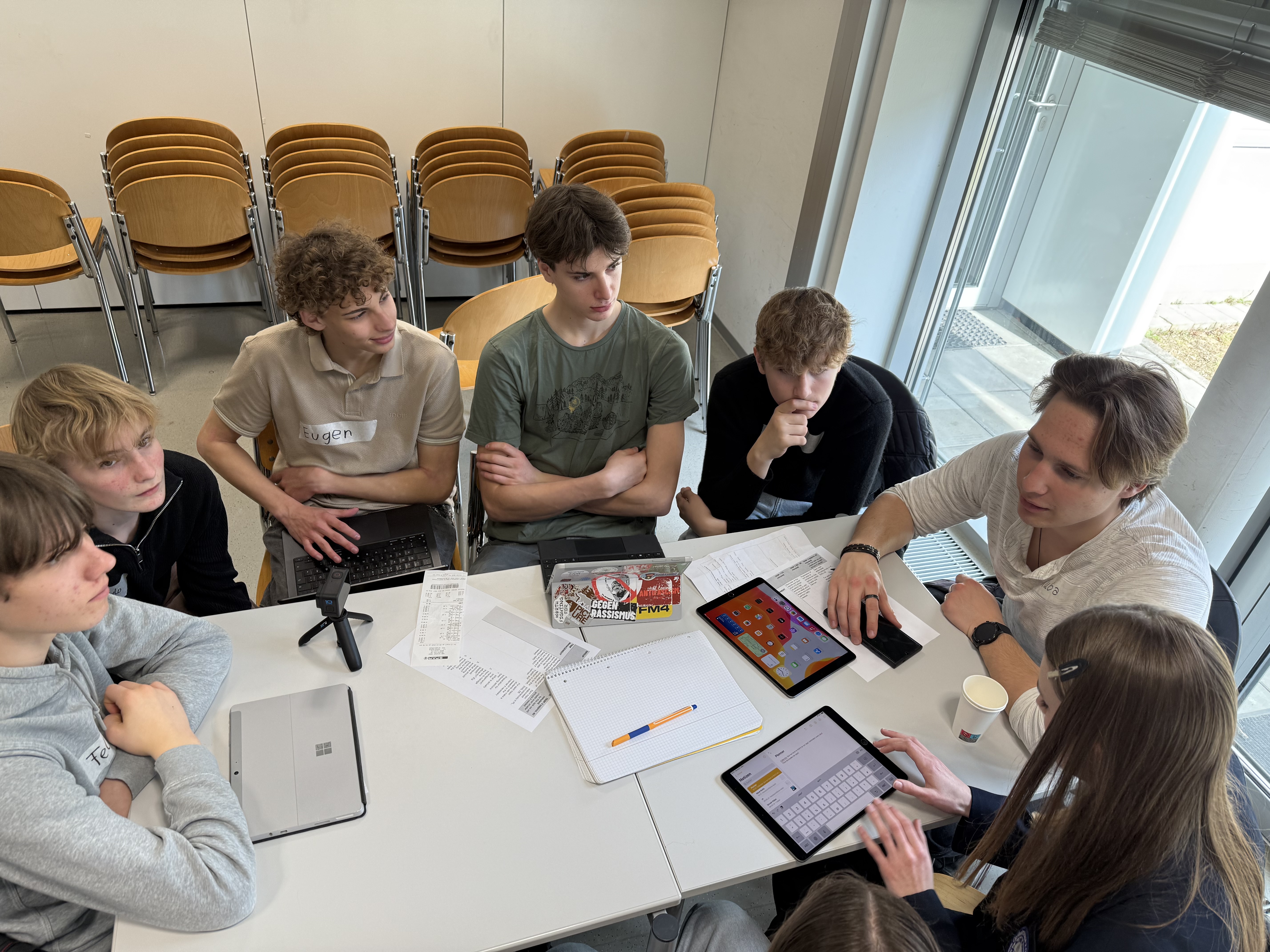
Recently, a group of students participated in a smartphone experiment to discover how reducing phone use influences everyday life. After completing the challenge, a survey was conducted. This report presents the results, discusses possible effects on future behaviour, and suggests ideas for a school-wide project.
What the survey reveals
24 students participated in the smartphone experiment. The survey results show that the majority of students had a positive experience. In fact, 71% of them said they would repeat the experiment, whereas only 29% would not do it again. Furthermore, many participants reported that they missed social media and messaging apps the most. However, despite these difficulties, several students noticed clear benefits. For example, they felt less distracted during lessons and had more time for hobbies, family and friends. Therefore, the experiment showed both challenges and advantages of reduced smartphone use.
Possible effects on future smartphone use
As a result of the experiment, students became more aware of how often they use their phone. Consequently, they plan to reduce their screen time in the future. In addition, some participants want to switch off notifications in order to avoid distractions. Besides that, several students also mentioned that they would like to spend more time on hobbies, sports or outdoor activities instead of using their phones constantly. This shows that the experiment may lead to healthier and more balanced routines.
Ideas for expanding the project
In order to involve more students, the school could expand the experiment to a large project. For instance, it could organise a “Smartphone-free Week” for all classes. Moreover, teachers could offer workshops about responsible media use. Finally, students could present their experiences and compare results, which would encourage discussion and reflection.
Elea Suppan (5ew)
Black History Month
In English class, Miss Braunegger’s group celebrated 100 years of Black History Month, which is celebrated in February each year to showcase Black history, heritage, and culture and to raise awareness for the path that still lies ahead to achieve racial equity and justice. It highlights the achievements and accomplishments of Black people and leaders.
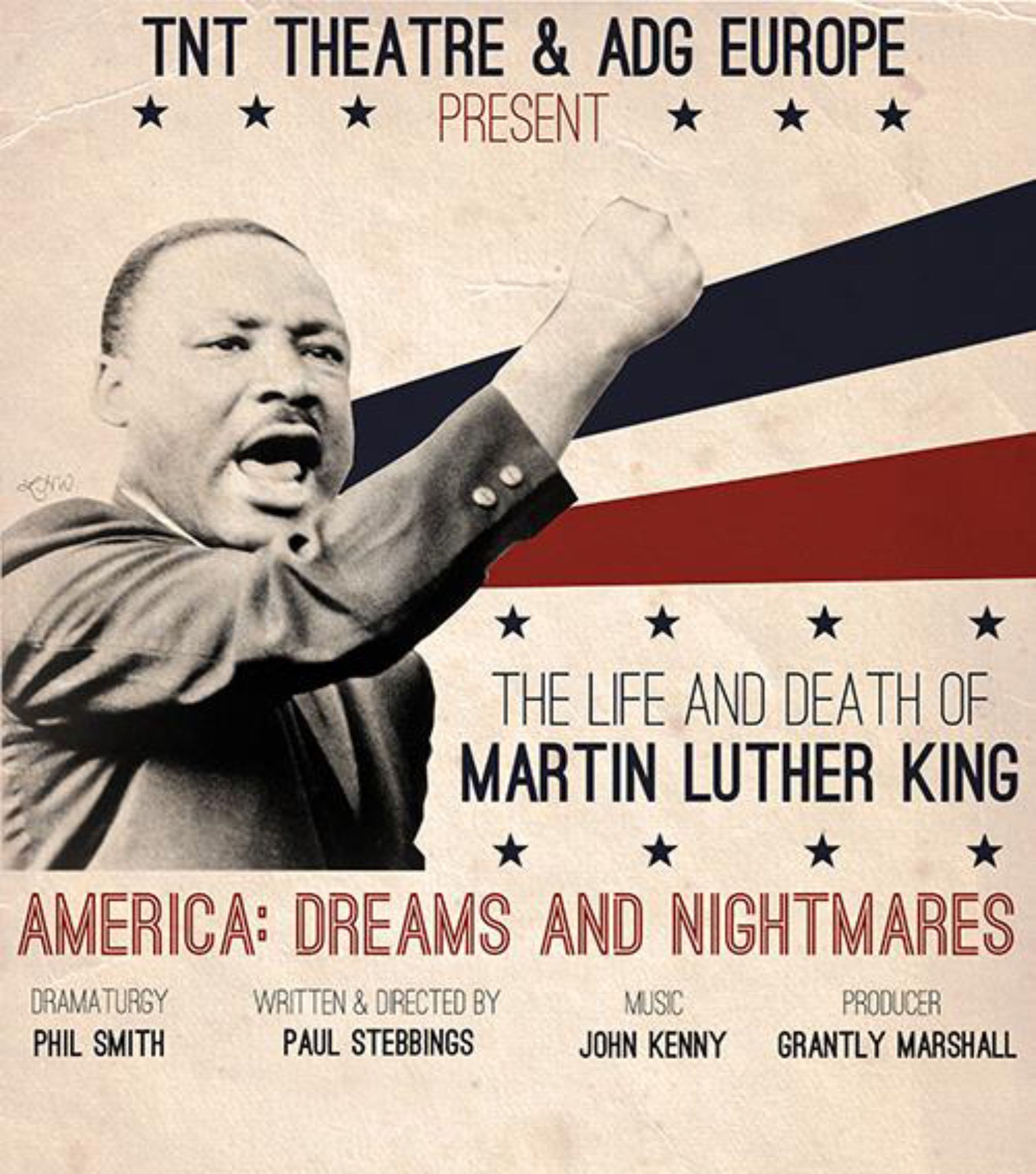
Furthermore, the whole class went to Schauspielhaus Graz to see the play “The Life and Death of Martin Luther King” to learn more about Martin Luther King’s work and Rosa Park’s fight against injustice. To finish the little project, the students shared their thoughts on racial injustice in texts. Here is one example, in which Thomas Kürbisch expands the topic and draws a connection between the US and Europe.
(Unjustified) Police Violence Against Black People in Europe and Austria
Most people in Europe are very well aware of cases of unjustified police violence against ethnic minorities in the US. ICE is mentioned almost daily in the news. Discrimination and violence by the police in Europe, however, is oftentimes not perceived as a real problem.
Oury Jalloh and Marcus Omofuma, both were probably killed by policemen. As for Oury Jalloh, there were ne real consequences. But these cases are only the tip of the iceberg. According to a report from the “European Union Agency for Fundamental Rights” (FRA) 58% of people of African descent say that their most recent police stop in the year before was a result of racial profiling. In general, 45% of the respondents say that they experienced racial discrimination in the last 5 years. In Germany and Austria, it was 70%.
Racial profiling describes the practice of law enforcement targeting people for suspicion of criminal activity only due to their physical appearance, ethnicity or race. This practice violates the fundamental rights in Austria.
Still, this happens a lot as surveys show. 25% of Austrians say that they were stopped by the police in the last 12 months. For people with “visible” African background it was 50%. So 1:2. In other European states the number is much lower. In Denmark for example it is 11:12.
Thomas Kürbisch (5ew)
Level 6
Hamlet
„Alas, poor Yorick! I knew him, Horatio. A fellow of infinite jest, of most excellent fancy.„
„To be, or not to be, that is the question“
„Something is rotten in the state of Denmark“
All of us had heard these quotes before, but finding out where they come from and staging scenes from the original play with props, scenery and music ourselves has made us realise much more intensively what they actually mean. The tragedy of Hamlet by William Shakespeare is definitely not dated at all!

Level 8
Reflecting on eight years of EAA
Looking back to our first day of school in 2018, it is hard to believe that eight years have already passed. It seems like yesterday, that we were walking through the hallways for the first time being intimidated by the “big kids”. And now, we are the big kids reminiscing back on eight years of EAA.
Starting with practising our lines for the play “The Gruffalo”, which we were presenting to our parents and teachers at our very first English evening, to ending with a well-deserved “Motto-week”. Safe to say: We collected many memories on the way! Mentioning them all, would inquire a book to be written for all of them to be included. Nevertheless, we would like to highlight some memories, that defined our class to whom we are today.
Not surprisingly, all English afternoons offered a great opportunity for us to grow together and thus, to create memories. Although some afternoons were cancelled due to Corona, we didn’t miss out on enjoying our time together. Our second favourite memory is our trip to Dublin. Now we weren’t only forced to spend lessons in Austria together, but also in Ireland, where the language school provided some very interesting, Irish teachers. Luckily, we survived Ireland and its stunning nature and arrived safely in Austria, with even more stories to tell. Reflecting on the last eight years, the best memories were created during the lessons. For example, in our first year we won the “Faschings-Wettbewerb” by dancing in our pyjamas to the song “Guten Morgen, Sonnenschein”. This success marked an era of iconic eight years.
Lastly, we would like to thank our teachers, who accompanied and supported us throughout our journey. Some teachers left, some stayed, but we, 8aw, always stuck together.
Teresa Koppin (8aw)